THE IMPORTANCE OF WORKING CAPITAL

Working capital is the money available to fund a company’s day-to-day operations. Because it includes cash, inventory, accounts receivable, accounts payable, the portion of debt due within one year, and other short-term accounts. In financial speak, working capital is the difference between current assets and current liabilities. Working capital is what’s left over when you subtract your current liabilities from what you have in the bank. Understanding your business’s working capital will come in handy when applying for equity or debt financing, working with partners and more. Whether you’re a new, growing, or established business, working capital, is crucial. It’s critical for day-to-day operations, payroll and paying creditors. And if you don’t have it, you’ll have to find it,
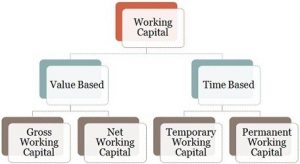
There are several types of working capital based on the balance sheet or operating cycle view. The balance sheet view classifies working capital into net (current liabilities subtracted from current assets featuring in the company’s balance sheet) and gross working capital (current assets in the balance sheet).
The calculation is simple: subtract current liabilities from current assets. Current assets are cash and assets you can convert into cash within a year. Current liabilities are short term debts or accounts that you need to settle within a year.
The working capital formula is:
Working capital = Current Assets – Current Liabilities
Therefore, a company with $150,000 of current assets and $120,000 of current liabilities will have $30,000 of working capital. A company with $120,000 of current assets and $120,000 of current liabilities has no working capital. A good working capital ratio is considered anything between 1.2 and 2.0. A ratio of less than 1.0 indicates negative working capital, with potential liquidity problems, while a ratio above 2.0 might indicate that a company is not using its excess assets effectively to generate maximum possible revenue.
One of the most significant uses of working capital is inventory. The longer inventory sits on the shelf or in the warehouse, the longer the company’s working capital is tied up. Having positive working capital can be a good sign of the short-term financial health for a company because it has enough liquid assets remaining to pay off short-term bills and to internally finance the growth of their business. Negative working capital means assets aren’t being used effectively, and a company may a liquidity crisis. This will lead to more borrowing, late payments to creditors and suppliers and, as a result, a lower corporate credit rating for the company.
About Post Author
